Five things this card tells you before you call
Sample Call Card: a real university recruitment mailer. Here's what each part means and what to say about it.
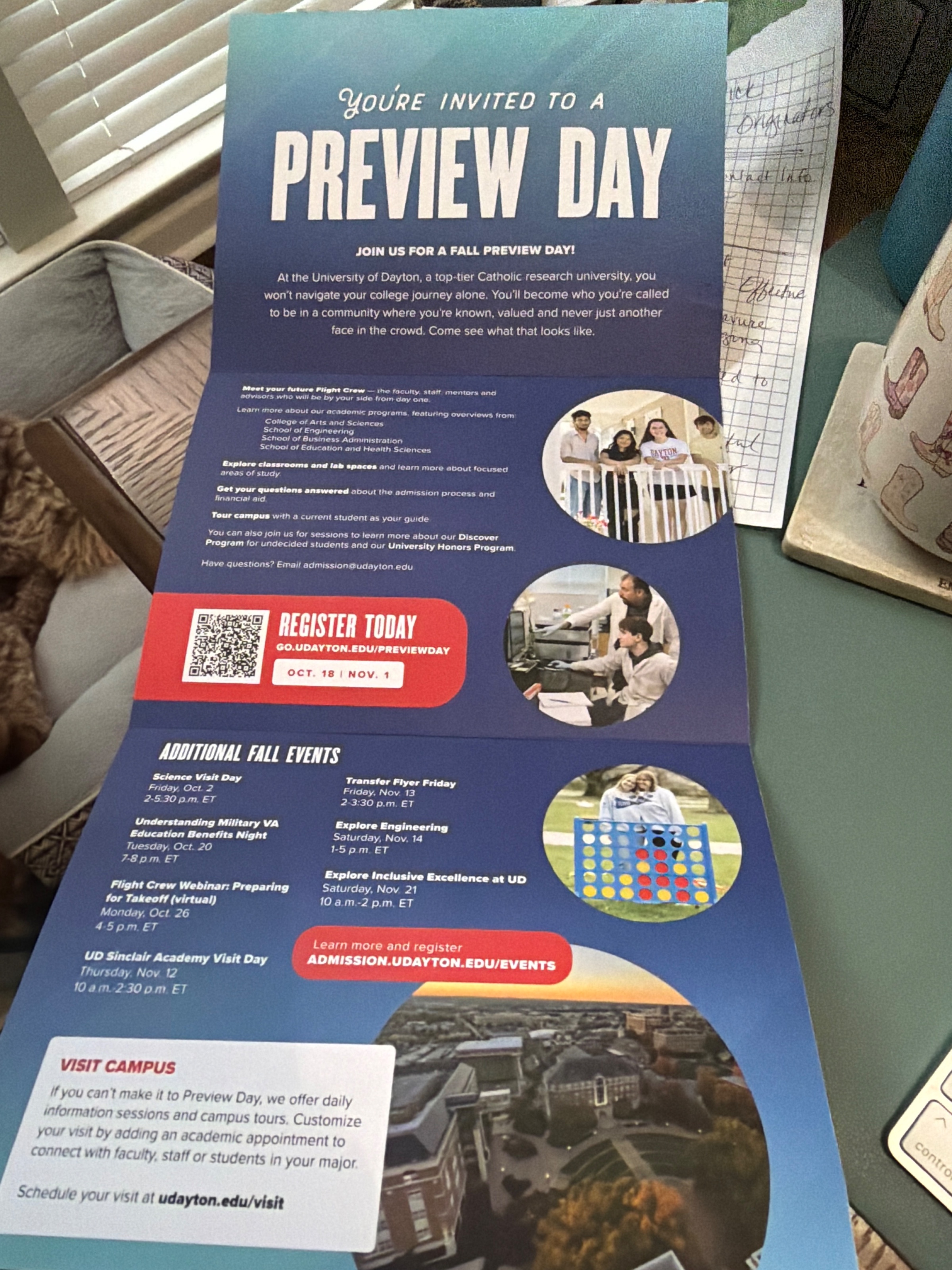
Start at the top: is it worth a call?
The first line says the best way in and why. In the sample, the university picks its own vendors, so your call goes to Dayton, not to the company that mails for it.
The score beside the name says how much there is to sell into.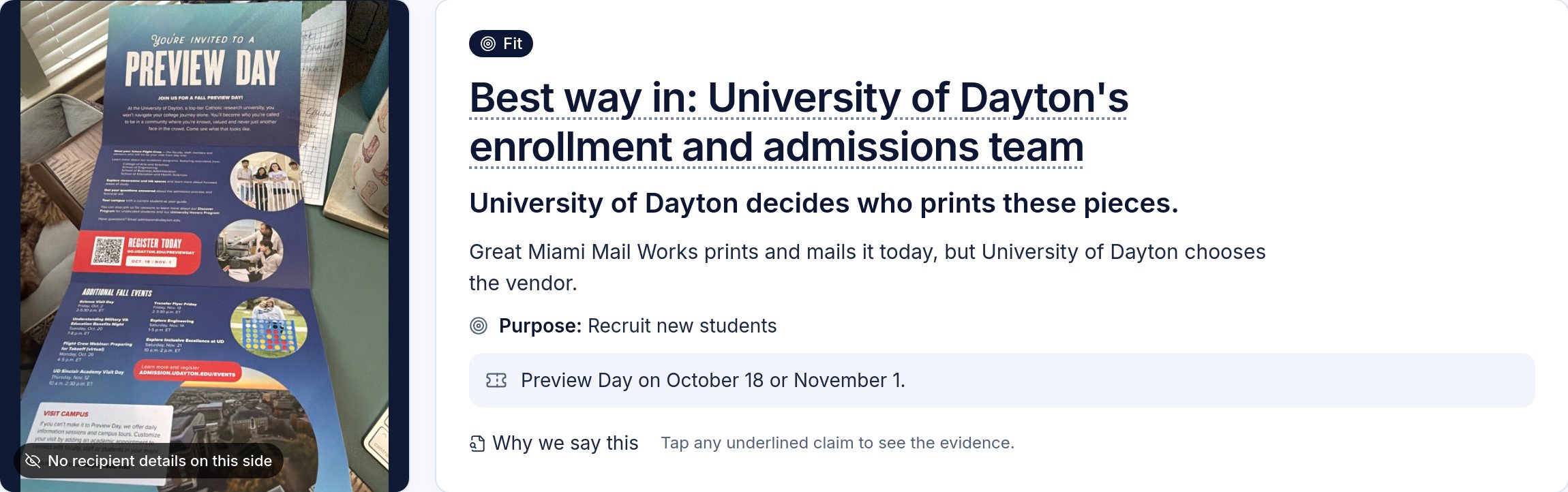
Who to call, and how to reach them.
A named person, their role, and the best route to them. Dayton's own directory lists Jason Reinoehl, who runs enrollment, and his office phone.
A role is a starting point, not proof he bought this piece. Ask who runs the campaign.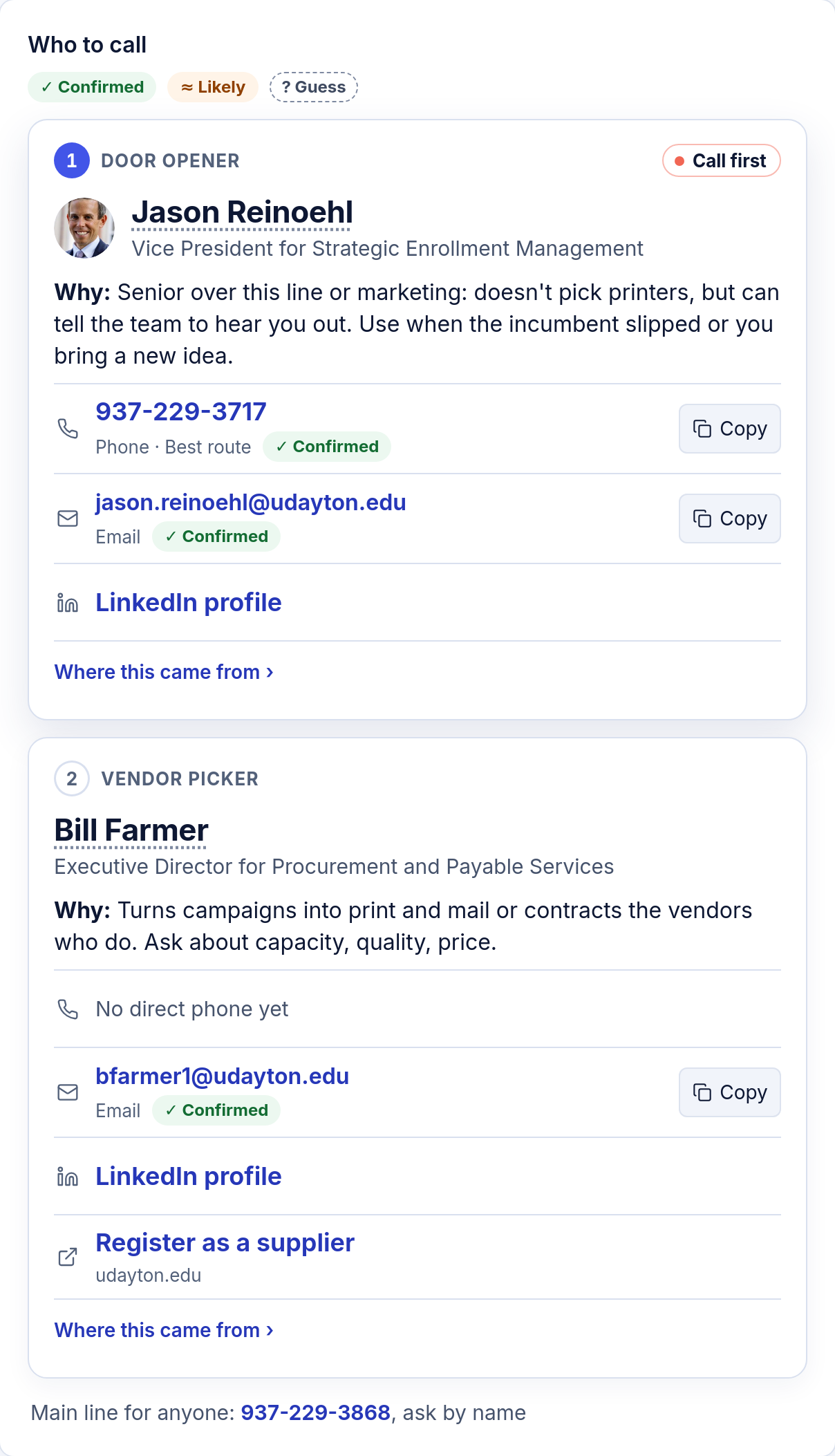
Who handles their mail now.
Who prints the piece, who mails it, and who holds the postage permit. In the sample, one mail company prints and mails it, and the university holds its own postage permit.
Each answer says how sure it is: Confirmed, Likely or a guess.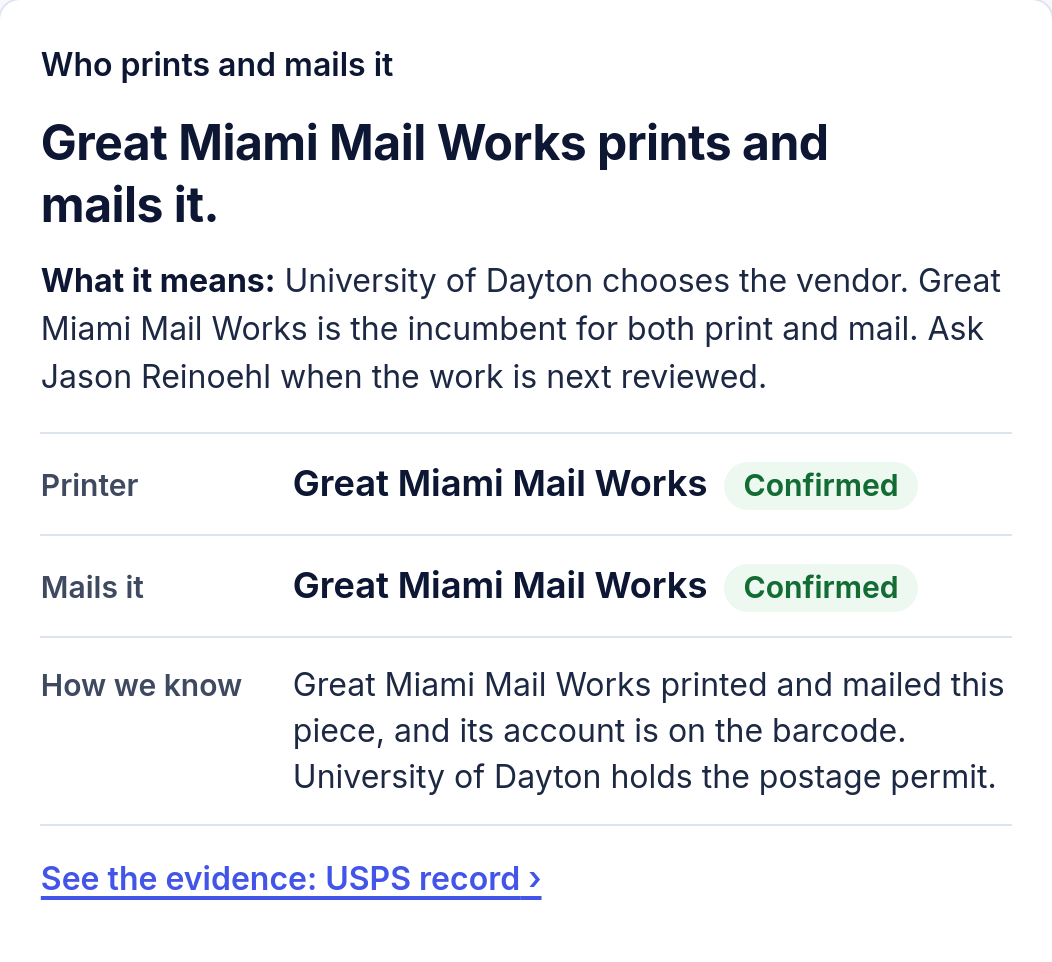
Your first line.
A question the piece itself raises, so you never open with "just checking in." Say it on the phone, or copy the email version.
Use your own words. Ask one question, then listen.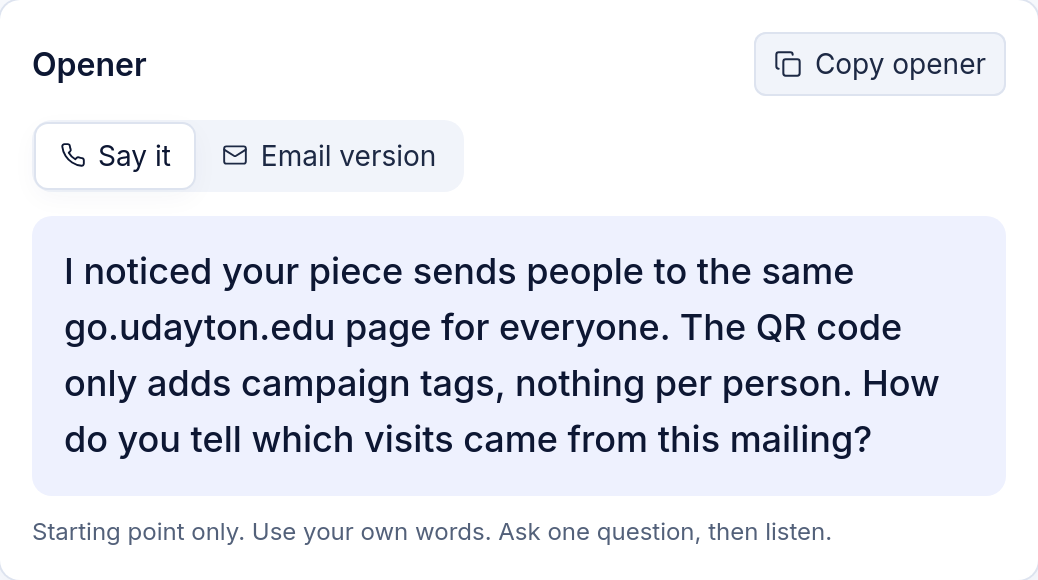
Check it yourself before you dial.
Tap any underlined fact and its source opens: what we found, why it matters, and the link. Facts stay apart from guesses.
If a fact looks wrong, tell us on the contact page.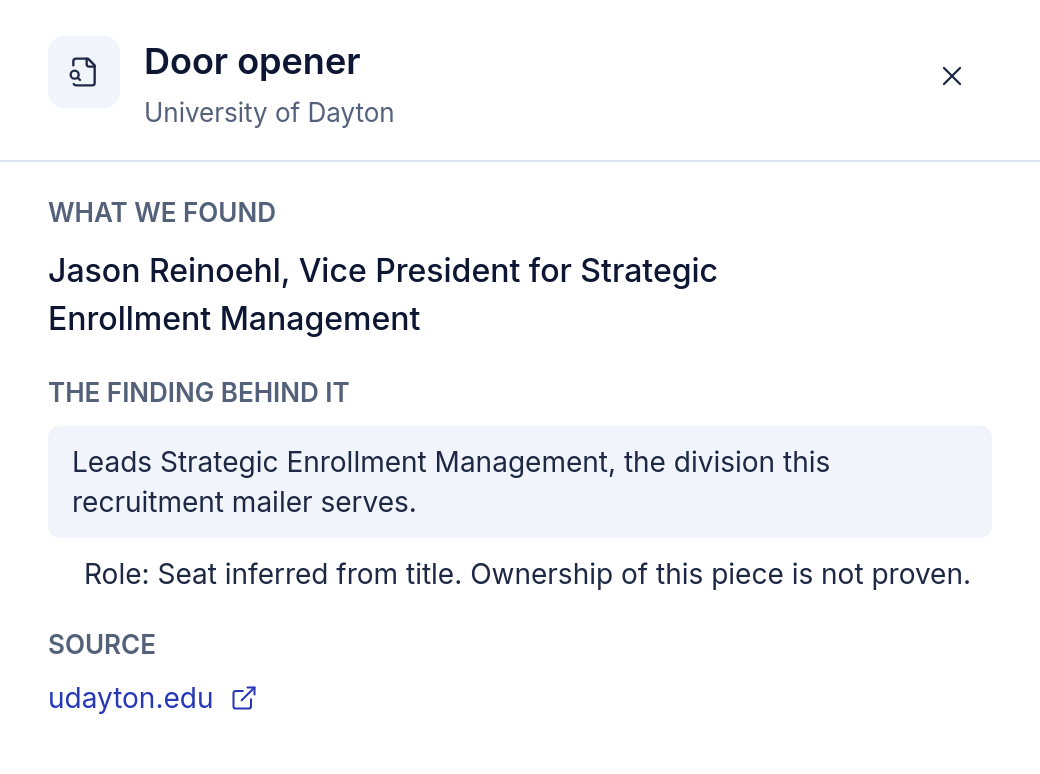


Real mailer, shared with permission. Mail company name changed. Not affiliated with University of Dayton.
You could research this yourself. Here's what you'd be hunting for.
Every Call Card reads the mailer the way a direct mail expert does, and hands you ideas your customer will pay for.
- Postage they may be leaving on the table. Whether the piece may qualify for a USPS postage promotion it isn't using, and roughly what that's worth per 10,000 pieces where it can be calculated.
- Money mailed to bad addresses. Whether the mailer appears set up to get address corrections back. If not, you have a fix to bring them.
- Response they can't measure. Whether every piece sends people to the same web page or QR code. If so, they can't tell who responded. Personal codes or web addresses fix that, and that's print work you can quote.
- When to call. The offer's expiry date, so you call while the next drop is still being planned, not after it's printed.
- More response from the same campaign. Ideas for pairing the mail with email previews, or a follow-up piece after someone visits their site.
- Paper, size and finish. What they chose, so you can open a format conversation.
- Your next account. Their other brands, and companies sending similar mail.
Your competitor sends a quote. You walk in with a postage question, a tracking fix and a date. Guess who keeps the account.
Now read one built from your own mail.
Your first 2 Call Cards are free. No credit card. No sales call.
Get my 2 free Call Cards See how to read a mailer, mark by mark